Practice Units
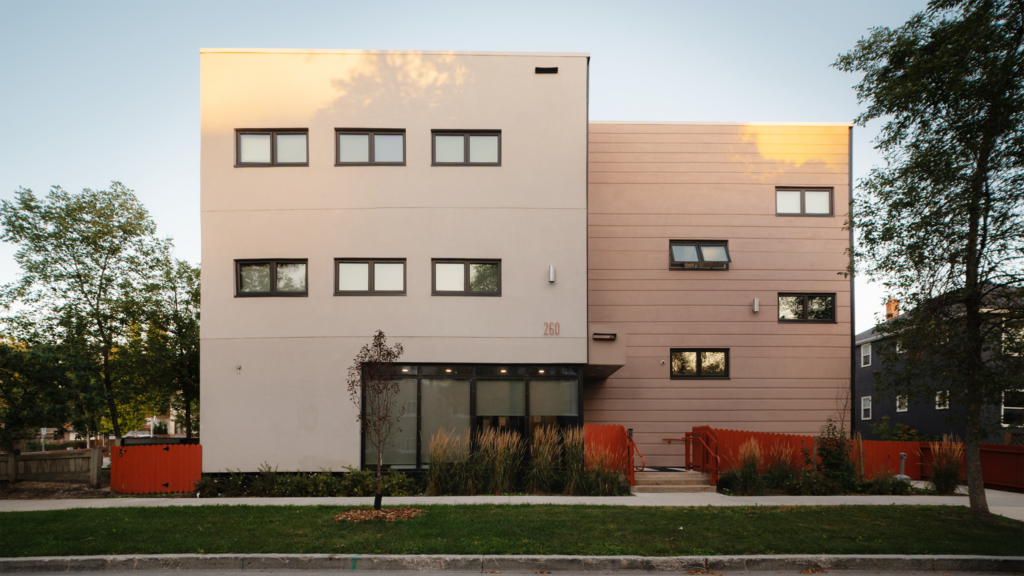
Within betaBLOK, Practice Units were structured as coordinated streams of work, each responsible for a critical component of the pre-development framework.
The Manage unit established the foundation through a baseline workplan, market-informed unit sizes, a standardized proforma, and a proforma-driven functional program aligning design with financial viability.
The Create unit advanced the architectural design through context analysis, precedents, unit plans, and material strategies, including cost-informed material selections and detailing considerations. Together, these units formed an integrated workflow that links economics, performance, and design into a clear, scalable pre-development process.
The Perform unit validated technical feasibility through preliminary zoning and code reviews, developed and tested exterior wall assemblies (including thermal modeling), and created tools to measure energy performance targets such as TEDI and achieving 25% improvement over NECB.
The Communicate unit translated these inputs into cohesive outputs, developing base models that integrate site and zoning conditions, coordinating site plans, 3D visualization elements, and the integration of prefabricated and high-performance systems.
Specific Explorations (Part 2)
betaBLOK applied its research through three site-specific studies, each used to test distinct housing strategies and generate targeted learnings across modular construction, energy performance, and client-driven development approaches.
Fort Garry Station (1350 Pembina Highway)
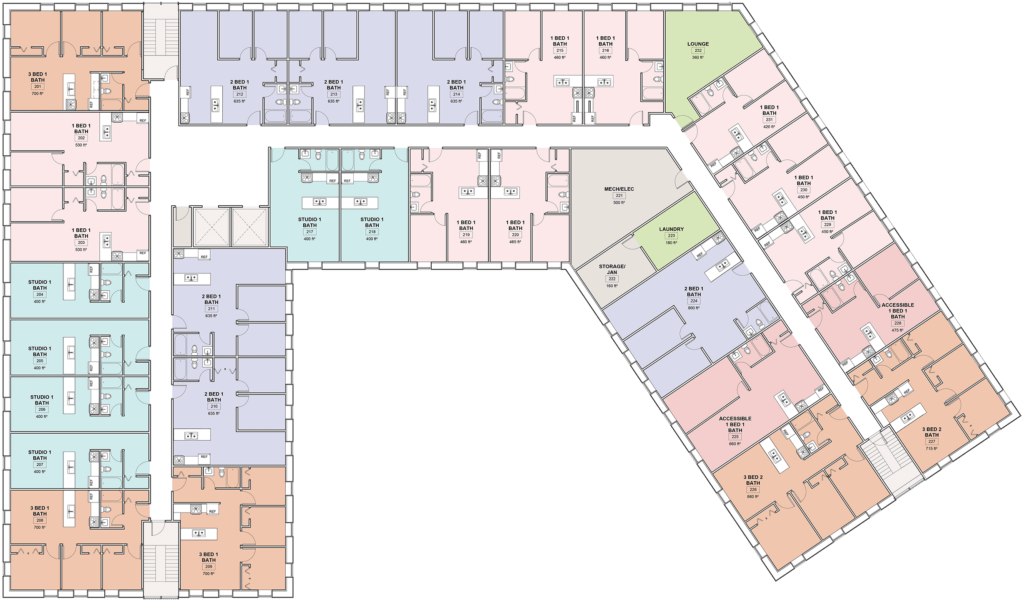
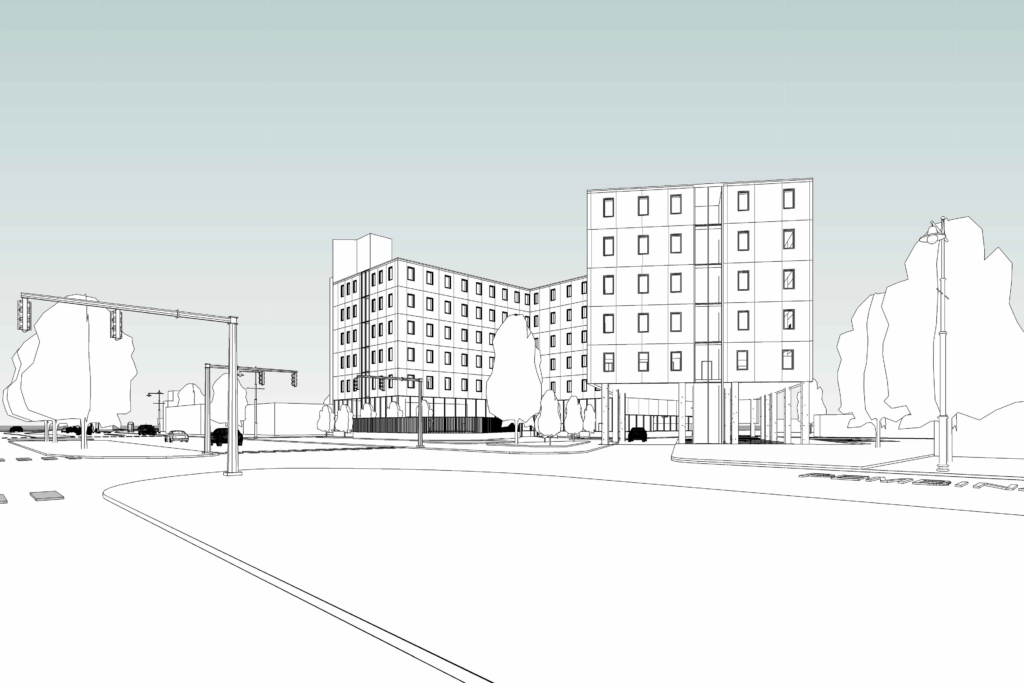
This study focused on higher-density, mixed-income housing within an urban corridor. The team tested how modular and prefabricated systems could scale to larger buildings, integrating panelized wall assemblies into a more complex massing strategy while considering site logistics and constructability. A strong emphasis was placed on high-performance design, exploring pathways toward net-zero readiness and aligning with aggressive energy targets through envelope optimization and system coordination. From a client visioning perspective, the project tested how public land can support a mix of residential, childcare, and commercial uses, demonstrating how affordability, revenue generation, and community programming can be balanced within a viable proforma.
Home on Pacific (385–395 Pacific Avenue)
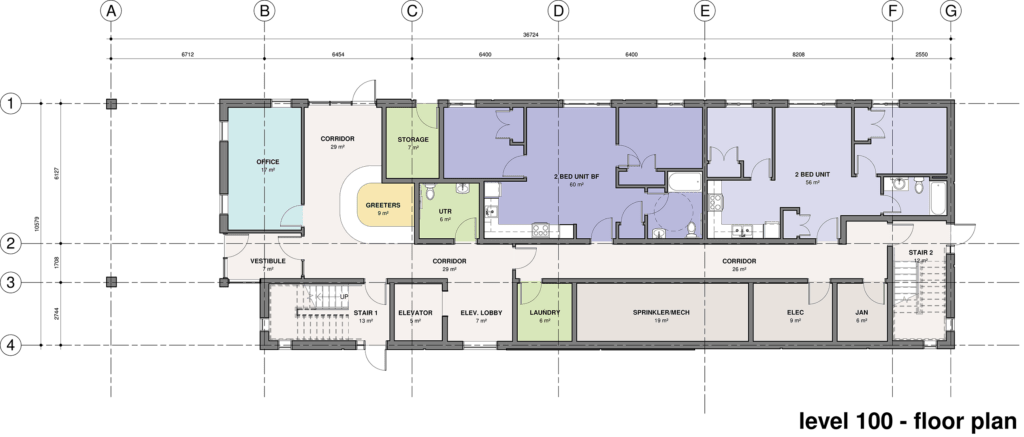
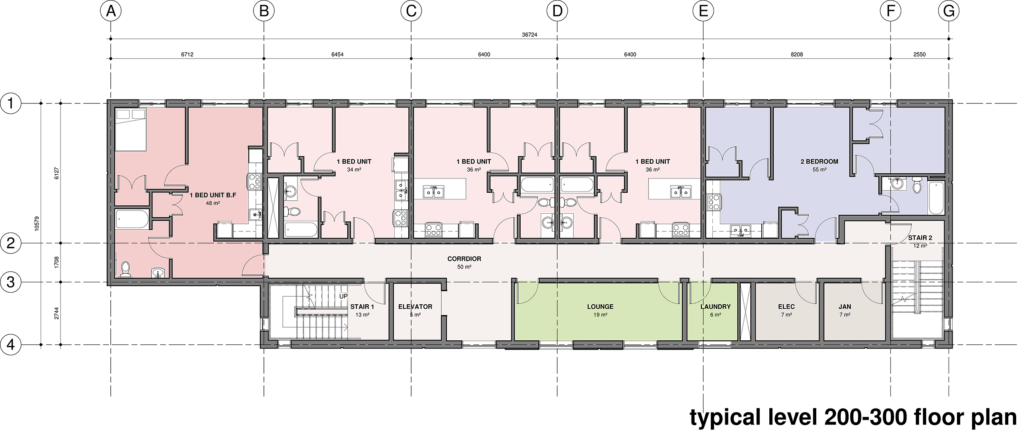
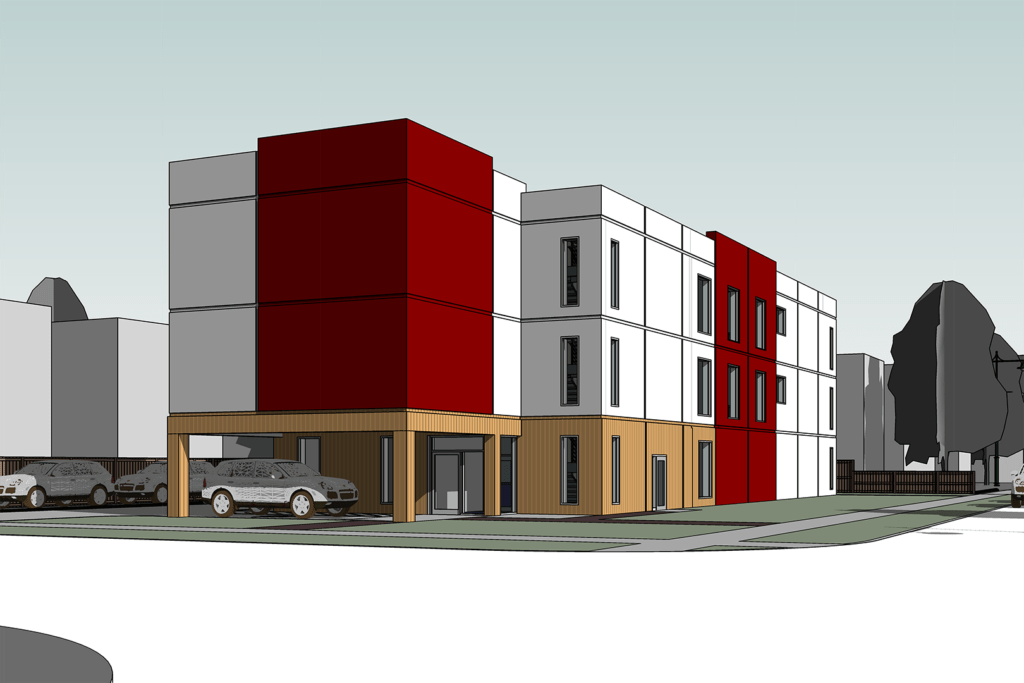
This study centered on supportive and affordable housing within a dense downtown context. Here, the team refined modular applications at a smaller scale, focusing on efficient floor plates, unit layouts, and repeatable construction systems suited to infill conditions. The project placed significant emphasis on social outcomes and community integration, exploring housing models tailored to vulnerable populations and incorporating on-site supports. In terms of energy performance, the team tested envelope assemblies and building configurations against targeted improvements over NECB, using tools such as thermal modeling to validate decisions. The project also advanced client visioning by aligning deeply affordable rents, funding streams, and support spaces within a realistic operating model.
The Eagle Crest Senior Housing (75 Oak Street in Vermilion Bay)
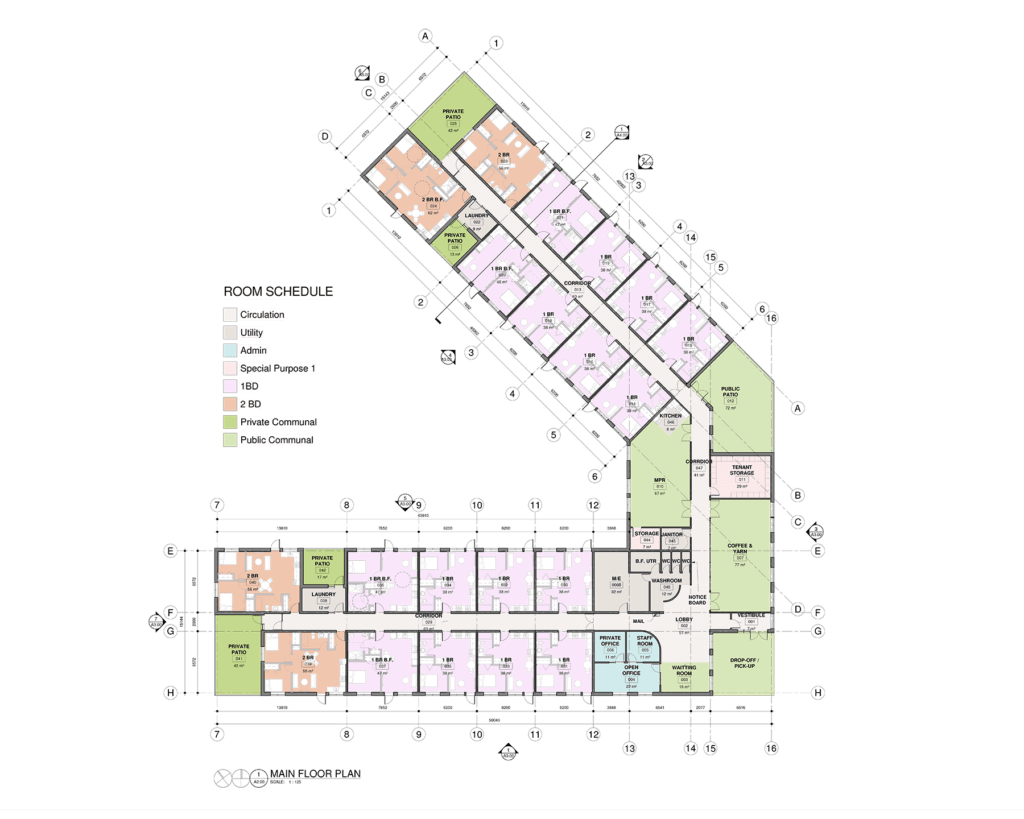
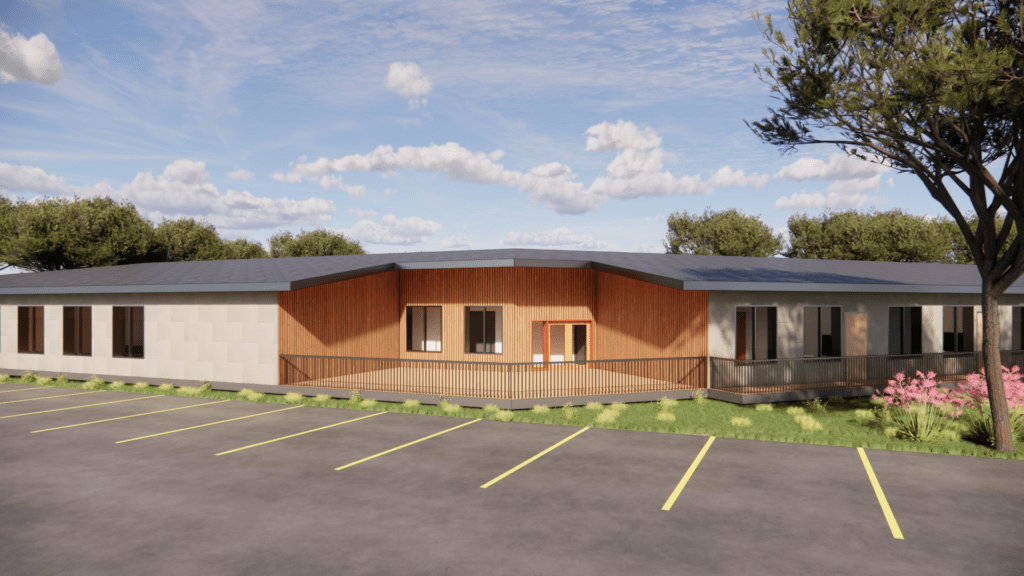
This study shifted to a rural context, focusing on a replicable seniors housing model. This project emphasized prefabrication as a primary delivery method, testing how modular systems can reduce construction time, cost, and complexity in remote or resource-limited settings. The team explored passive design strategies and energy efficiency suited to a single-storey, low-density building, including envelope performance, orientation, and simplified mechanical systems to meet funding requirements. From a client and community perspective, the project tested how housing can support aging in place while remaining financially viable, incorporating opportunities for social enterprise and ensuring the model could be repeated across similar communities.
Collectively, these explorations demonstrate how betaBLOK translates research into applied design intelligence, testing scalable construction systems, validating high-performance strategies, and aligning development realities with community needs across diverse contexts.
Conclusion:
This betaBLOK demonstrated a clear and replicable approach to pre-development, integrating research, design, and technical validation. Through coordinated Practice Units and site-based explorations, the initiative builds practical knowledge in modular construction, high-performance building systems, and financially viable housing models. The result is a framework that not only strengthens internal expertise on such fields but also equips f-BLOK to engage clients earlier, navigate funding, apply regulatory requirements with confidence, and deliver thoughtful, scalable solutions to the evolving demands of new affordable and community housing projects.